
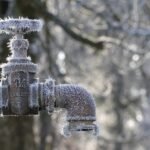
Water expands when it freezes, and that force can split hoses, crack fittings and burst pipes. Most of that damage is easy to prevent. An hour of work now can save you from leaks and repair bills in spring.
When to Winterize
Aim to finish before your first hard freeze. A good rule is to act when overnight lows are forecast at about 32F or colder. In the northern states that usually means earlier than now. Many areas are seeing freezes arrive late this year, but they are still coming, so don’t wait for the first cold snap to surprise you.
Check your local forecast, and look at your state’s cooperative extension service for typical first-frost dates in your area. If a cold night is in the forecast this week, start with the outdoor faucets and hoses.
It helps to gather your supplies first. For most homes that means a bucket or towel for drips, a flashlight for finding shutoff valves, and a spot indoors where hoses and sprinklers can dry. Depending on your setup, you might also want hose bib covers, replacement washers or a hose reel.
Work on a mild afternoon if you can. Valves and fittings are easier to turn when they aren’t stiff with cold, and any water you drain is less likely to freeze on the ground and make a slippery patch near your door.
How to Winterize Garden Hoses
Hoses hold more water than you might expect, and a full hose left outside can freeze and split. Here is the routine:
- Turn off the water and disconnect the hose from the faucet, along with any splitters, nozzles or timers.
- Drain it fully. Walk the hose from the faucet end to the far end to push water out, then lift each end and work the water along. Repeat until nothing comes out.
- Coil it loosely. Tight loops and sharp kinks can crack the hose over time, especially in cold weather.
- Store it inside, in a garage, shed or basement, out of direct sun and away from sharp edges.
A hose reel makes storage easier and keeps coils from kinking. If you are thinking about one, our hose reel guide covers the main types. If you want to learn more about hose types and care, see our garden hose knowledgebase.
Also check the ends. If a coupling is bent or leaking, set the hose aside to repair or replace in spring rather than putting it away as is.
Don’t leave a hose attached to the faucet for the winter. It traps water against the faucet, and that is one of the most common ways a hose bib gets damaged.
How to Winterize Outdoor Faucets (Hose Bibs)
- Disconnect the hose and any splitters or attachments.
- If there is an indoor shutoff valve for the outdoor faucet, close it. Then open the outdoor faucet to let the remaining water drain out.
- Check the manufacturer’s directions for your faucet type. In general, leftover water needs room to expand, so don’t leave a full faucet sealed.
- Consider an insulated faucet cover (a hose bib cover) for added protection on very cold nights.
Frost-proof (freeze-resistant) faucets are built to shut off water inside the warm part of the house, but they still need help. If a hose stays attached, the water trapped in the hose can freeze and push back into the faucet. Always remove the hose.
If you aren’t sure where your shutoff valve is, or you can’t tell what type of faucet you have, ask a licensed plumber. It’s a quick question that can head off a burst pipe.
How to Winterize Sprinklers and Sprinkler Systems
Portable Sprinklers
Disconnect the sprinkler from the hose and drain it by tipping it and shaking out the water. Clean any debris out of the nozzles and arms, let it dry, and store it indoors. If you are replacing an old one in spring, see our oscillating sprinkler guide and our broader lawn sprinkler guide.
In-Ground Sprinkler Systems
Start by shutting off the water supply to the system and draining what you can, following your owner’s manual. Clearing the lines with compressed air, often called a blowout, is typically done by a sprinkler or irrigation professional. Too much pressure can damage heads and pipes, and a compressor is not a casual tool to borrow. If you aren’t sure, check your manual or call a local pro.
Set the controller to rain mode or off so it doesn’t run during winter. If you notice cracked or worn heads, our sprinkler heads guide can help you sort out replacements for spring.
Drip Lines and Soaker Hoses
Treat these like hoses. Turn off the water, disconnect them from the faucet, and drain them as best you can by lifting sections and letting water run out. Remove timers, filters and pressure regulators if the manufacturer says they should not stay out in freezing weather, and store everything indoors. Rigid drip lines in the ground may need to be drained at low points. Our soaker hose guide has more on choosing and caring for them.
Expandable hoses are a bit different, because they are made of lightweight fabric and thin inner tubing. Drain them completely and store them indoors; see our expandable hose guide for details.
Spring Checklist Preview
Next spring, take a few minutes before you reconnect everything:
- Inspect hoses for cracks, bulges and leaks near the ends.
- Check the rubber washers (gaskets) in hose couplings, and replace any that are cracked or flattened.
- Look over faucets, sprinklers and drip lines for drips once the water is turned back on.
- Turn the water on slowly and check for leaks.
Winterizing FAQ
Can I leave my hose out all winter?
We don’t recommend it. Even a drained hose can crack when it’s left in the cold, and it’s easy for water to stay trapped inside. Storing it indoors protects the hose and the faucet.
Do frost-free faucets need winterizing?
They need less, but yes. Remove the hose and any attachments so trapped water can’t freeze back into the faucet. Check the manufacturer’s directions for anything else.
How do I know if a hose bib froze?
Common signs are no flow, only a drip, or water leaking inside the wall or in the basement near the faucet once the weather warms up. If you suspect a frozen or split faucet, shut off the water to it and call a plumber.
Should I use heat tape or insulation on pipes?
In general, insulating exposed pipes helps. If you use heat tape or similar products, follow the product instructions closely. For pipes in walls or crawlspaces, ask a plumber what’s right for your home.
Winterizing is one item on a longer fall list. For the rest, see our fall lawn care checklist.