
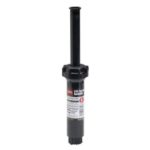
A cracked, clogged or misaligned sprinkler head wastes water and leaves dry or soggy patches. The good news is that a head is one of the cheaper parts of an in-ground system to swap, and many homeowners handle it themselves.
This guide covers replacement and upgrade heads for in-ground irrigation, the kind that pop up from the lawn when a zone runs. If you water with a hose and a sprinkler on the grass, see our guides to the best oscillating sprinklers and lawn sprinklers instead.
We are a professional reader-supported review site. You get our best product recommendations and we can receive small commissions from our affiliates at no cost to you. Win-Win!!
Spray Heads vs Rotors
Most in-ground heads fall into two families. Knowing which one a zone uses is the first step, because you should replace like with like.
Spray heads release a fixed fan of water across a short distance. They suit small lawns, narrow strips and planting beds, where the spray reaches roughly 8 to 15 feet. They put water down quickly, so they run for shorter cycles.
Rotors send one or more streams that sweep back and forth or around in a circle. They throw much farther, often 20 feet or more, and apply water more slowly. That makes them a better fit for larger open lawns.
Do not mix the two on one zone. A spray head can put down water several times faster than a rotor. If they share a zone, one area will be soggy by the time the other is damp. Keep each zone to a single head type, and ideally a single model.
What to Look For
Product pages list a lot of numbers. These are the ones that matter for a replacement.
Pop-up height. A 4-inch pop-up is a common size for lawns. It lifts the nozzle above the grass so the spray is not blocked. Taller grass or ground cover may call for a 6-inch or 12-inch body. If you are replacing a head, match the height already in the ground.
Nozzle and arc. Arc is how much of a circle the head covers. A fixed nozzle comes in set patterns, such as a quarter, half or full circle. An adjustable head lets you set the arc, often anywhere from 0 to 360 degrees, which helps at odd corners. Also check the throw range, and make sure it fits the space so water lands on the lawn and not on the driveway.
Pressure regulation. Too much pressure turns spray into a fine mist that drifts away. Too little leaves the edges dry. Some heads have built-in pressure regulation, and others rely on the system. If your heads often mist or the spray looks uneven, check your pressure. A simple gauge that screws onto a hose bib can give you a rough reading, and the head maker lists its recommended range.
Brand and thread compatibility. Most heads thread onto a 1/2-inch riser, but check the product details before you buy. Using one brand across a zone keeps spray patterns and flow rates consistent. Matching nozzles to the body also matters, since parts from different makers do not always fit or perform the same way.
Our Picks
We have not tested these heads. The notes below come from each product’s listing details and the general traits of its type. Please check the listing for full specs before you order.
Rain Bird 1804VAN 1800 Series 4-Inch Pop-Up Spray Head
This is a spray head from a long-running line of lawn heads, with a 4-inch pop-up body. Heads in this style are widely used, so matching or replacing an existing one is usually simple. The model name points to a variable arc nozzle, but confirm the arc and radius on the listing.
Who it suits: Homeowners replacing a worn spray head in a small lawn or bed, especially if the rest of the zone is already Rain Bird.
Hunter Pro 4-Inch Pop-Up Spray Head, Adjustable 0-360 Degrees, 8-15 ft
This 4-inch pop-up spray head has an adjustable arc from 0 to 360 degrees and a listed throw of 8 to 15 feet. The adjustable arc is handy where a fixed pattern would overspray or miss a corner.
Who it suits: Anyone with irregular lawn edges, corners or beds who wants to fine-tune coverage, particularly on a zone that uses Hunter parts.
Rain Bird 32SA Gear Drive Rotor, 19-32 ft
A gear drive rotor turns with an internal gear set, which keeps the movement smooth and the water stream steady. This one is listed with a 19 to 32 foot range, which fits medium to large lawn areas.
Who it suits: Homeowners with a mid-sized open lawn who want to replace a rotor with another Rain Bird. Check that the range suits your zone.
Hunter PGP-ADJ Rotor, 22-52 ft, 4-Inch Pop-Up, 2-Pack
This 4-inch pop-up rotor is listed with a 22 to 52 foot range, and the PGP-ADJ name points to adjustable settings. It comes as a 2-pack, which helps if you are replacing more than one head or want a spare. That long range suits big open areas.
Who it suits: Owners of larger lawns, or anyone replacing several rotors on a Hunter system.
Rain Bird 5004PC Rotor with Pro Nozzle Set
This rotor is sold with a Pro nozzle set, so you can choose a nozzle that fits your zone instead of taking one fixed setup. Nozzle choice affects flow and reach, so follow the maker’s chart for your pressure.
Who it suits: DIYers who want to tune flow and distance on a Rain Bird rotor zone, and who are comfortable reading a nozzle chart.
Replacing a Sprinkler Head: The Basics
A simple swap often takes a few minutes. If a head is leaking at the base, the line is broken, or you are unsure what is below ground, call an irrigation pro. Bigger repairs can also mean working near buried utilities, so call 811 before you dig deep.
- Turn the zone off at the controller, and shut off the water supply if you can.
- Clear the grass around the head and dig down carefully by hand to expose the body and riser.
- Unscrew the old head by turning it counterclockwise. Note its height, spray pattern and brand.
- Flush the line briefly to clear dirt, then check that the threads on the riser are clean and undamaged.
- Wrap the threads with plumber’s tape if the head’s directions call for it, and screw the new head on by hand.
- Run the zone and watch the spray. Adjust the arc and radius, then set the top flush with the soil so mowers will not clip it.
- Backfill the hole, and keep the surrounding grass trimmed so it does not block the spray.
Before Winter
In cold climates, irrigation lines are usually winterized before freezing weather arrives. That means draining them or blowing them out, so water left in the pipes and heads does not freeze and crack them.
Follow your system maker’s guidance for this step. Many homeowners hire a pro for it. Compressed air can be dangerous if it is misused, since pressure that is too high can burst fittings and cause injury. If you are not sure what to do, a pro is the safer choice. In mild climates, you may not need to winterize at all, so check what is common in your area.
A fall walk-through is also a good time to spot heads that are cracked, tilted or buried, and to replace them before the next season.
Wrapping Up
Choose the head type that already fits your zone, match the brand and height, and check your water pressure if the spray looks off. If a repair goes beyond a simple swap, a local irrigation pro is worth the call.