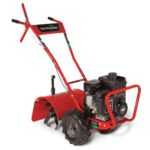
A rear tine tiller is built for hard work: breaking up compacted, clay-heavy or never-worked ground, and preparing larger gardens. The engine drives the wheels and the tines separately, so the machine pulls itself forward while the tines dig in, and you steer rather than fight it.
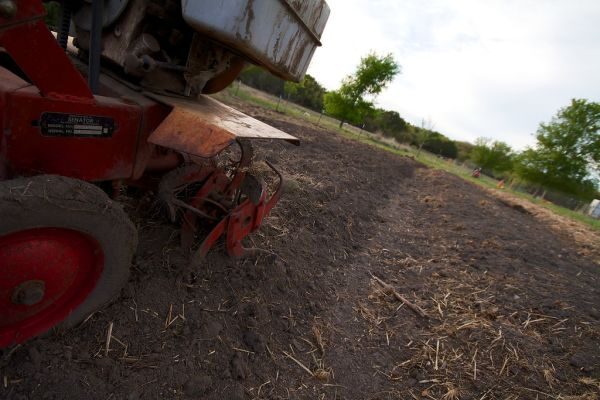
If your plot is small, or the soil is already loose from past seasons, a front-tine tiller or a hand cultivator is usually enough. Below you will find how the types compare, when to till, what to check before you buy, and three picks. For how these machines are used, see this overview of rear tine tillers.
We are a professional reader-supported review site. You get our best product recommendations and we can receive small commissions from our affiliates at no cost to you. Win-Win!!
Rear-Tine vs. Front-Tine vs. Cultivator
Rear-tine tillers have the tines behind the wheels. They are heavy, powered and self-propelled, which makes them the best fit for hard soil, sod and large plots.
Front-tine tillers have the tines out front and tend to be lighter and less costly. They work well in soil that has been worked before, but they can bounce and pull you around in hard ground.
Cultivators are small, light machines (or hand tools) for loosening the top few inches, mixing in compost and weeding between rows. They suit small beds and raised beds.
When to Till
Fall: if the soil is workable, tilling in fall lets you work in leaves, compost or other amendments before winter. Spring: till to prepare beds once the soil has dried out enough to work.
Do not till soil that is wet or frozen. To test it, squeeze a handful. It should crumble. If it forms a sticky ball, wait a few days and test again.
Avoid over-tilling, because repeated passes can break up soil structure. Call 811 before you dig or till near possible buried utility lines. Wear eye and ear protection and closed-toe boots, and follow the safety instructions in the manual.
What to Look for in a Rear Tine Tiller
When it comes to finding the best rear tine tiller, you need to look at several factors. Compare a few factors so you do not end up with a machine that does not suit your soil or garden. A tiller is a big purchase, so make sure it fits your needs.
These are the main factors to compare.
Which Way the Tines Rotate
With rear tine tillers, you can get machines that have counter-rotating tines or forward-rotating tines. Here’s the difference between those two types.
- Counter-Rotating Tines. These tines don’t travel in the same direction as the wheels do. They go in reverse from the direction of the wheels. This kind of rotation is great when you’re dealing with new, hard ground, or if you expect to hit a lot of packed clay.
- Forward-Rotating Tines. With this kind, which is also known as standard, the tines move forward — in the same direction of the wheels. This kind is best for tilling over previously tilled land that’s a little looser.
You can also find rear tine tillers that feature both styles of rotation. They are known as dual-rotating tines.
What the Weight Will Be
Tillers aren’t light pieces of equipment. They can weigh hundreds of pounds. If the thought of handling equipment that heavy is intimidating for you, you might want to look for one of the lighter models so you’ll feel confident that you can handle it.
If the idea of pushing and lugging around a heavy tiller doesn’t bother you, you’ll be okay to order whichever model you want, regardless of the weight.
What Tilling Depth and Width You Need
You’ll want to make sure the tiller you choose matches up with what you need when it comes to how wide you’ll till and how deep it will go.
Take a look at the plants you’re going to be putting in. You’ll be able to find out from the growing instructions how deep you’ll have to plant them to give them their best chance of success. Use that guideline to see how deep you’ll need your tiller to reach.
Three Picks: Rear Tine Tiller Reviews
1. EARTHQUAKE Victory Rear Tine Tiller (209cc)
This is the current version of the Victory line. It’s a gas tiller aimed at homeowners with hard, clay-heavy or never-worked ground. On paper, its counter-rotating tines spin against the wheels to break up compacted soil.
The maker says it has a 209cc engine, a cast-iron transmission, and a handlebar with three height positions that allows one- or two-handed control. It tills a row 16 inches wide and up to 10 inches deep, and an instant reverse handle helps you turn in tight spots and along fences. Shields keep soil from flying onto nearby plants.
The trade-off is size. This is a full-size rear tine machine, so expect to wrestle it a bit when you load it or store it. The maker lists a 5-year limited warranty. See it on Amazon
2. NOVUS 18-Inch Dual Direction Rear Tine Tiller (212cc)
This gas tiller suits a larger vegetable garden or a patch of tough soil where you want a choice of tine direction. You can switch between standard and counter-rotating tines, so one machine can break new ground or work over beds you already have.
The maker says it has a 212cc engine, a full gear transmission instead of a belt drive, and 16 steel tines. It tills 18 inches wide and 4 to 10 inches deep. It has two forward speeds and one reverse, and the tires are airless, so there are no flats to fix.
The trade-off is that it’s a heavy, gas-powered machine from a smaller brand, so check the weight and how you’ll move it before you order. The maker lists a 2-year warranty. See it on Amazon
3. Sun Joe 16-Inch
Note: this is a front-tine electric model, not a rear-tine tiller. It is included as a lighter option for small and medium gardens. It is smaller, generally costs less, and is easy to store.
This is an electric model with a 13.5 Amp motor that runs at 370 RPM, enough power for a small home garden. It has an 18-inch tilling width and an adjustable depth that reaches a maximum of 6 inches.
If you need a strong rear tine tiller for hard ground, this is not the one. If you want a compact unit that weighs a fraction as much, it may be worth considering, perhaps as a second machine for small jobs.
The handle height adjusts to 3 positions for comfort. The wheels are small, so they may drag if you till deep, which can make the work harder. It is still a good unit for its size. See it on Amazon
Rear Tine Tiller FAQ
How deep should a tiller go?
For most vegetable beds, 6 to 8 inches is plenty. Check the planting depth on your seed packets, and go deeper only to break up compacted ground or work in amendments.
Is it better to till in fall or spring?
Both can work. Fall tilling lets you mix in leaves, compost or amendments before winter if the soil is workable. Spring tilling prepares beds for planting once the soil has dried out.
Can you till wet soil?
No. Wet soil forms clumps and can be compacted by the machine. Squeeze a handful: if it crumbles, you can till; if it forms a sticky ball, wait.
Do you need a rear tine tiller for a small raised bed?
Usually not. A cultivator or hand tools are easier to handle and enough for loose, raised-bed soil.